
Change is constant in any city, and current local leaders are calling for a readjustment of past visions.
Case in point: the Denver Civic Center 100 Years Vision Implementation project is touted as a plan to reimagine Civic Center Park for the next century. The project calls for closing a significant portion of the park until 2027 to make various improvements to the grounds for the next century.
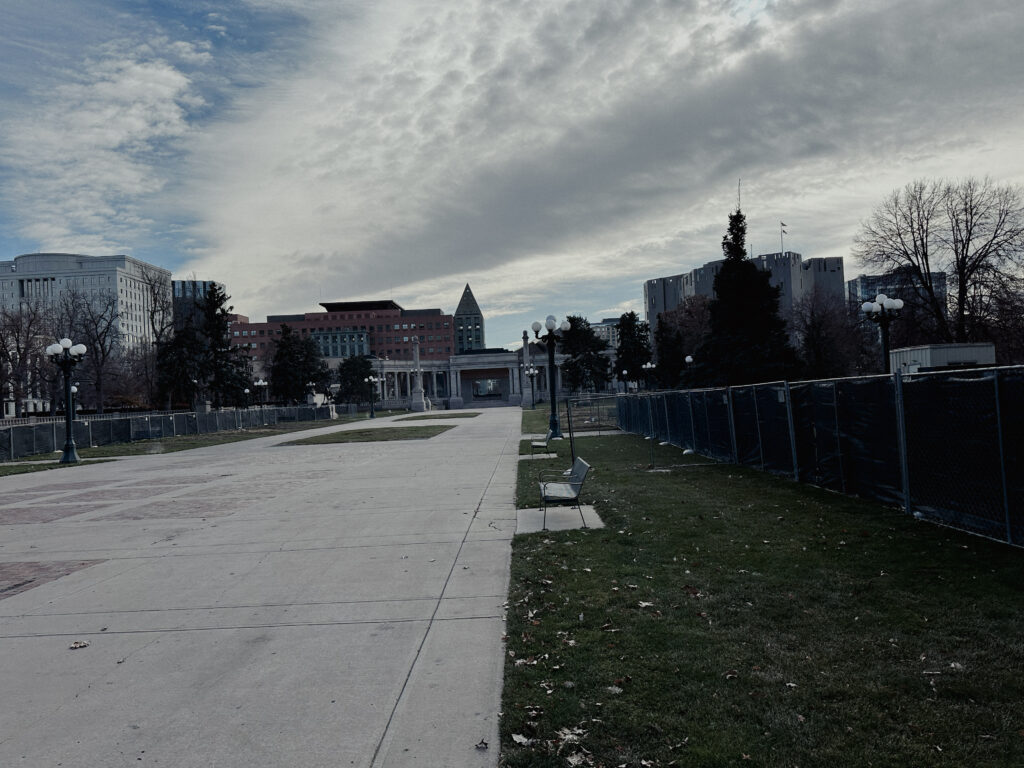
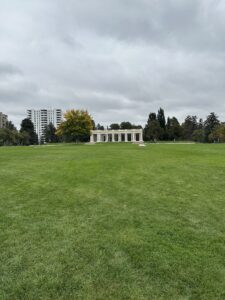
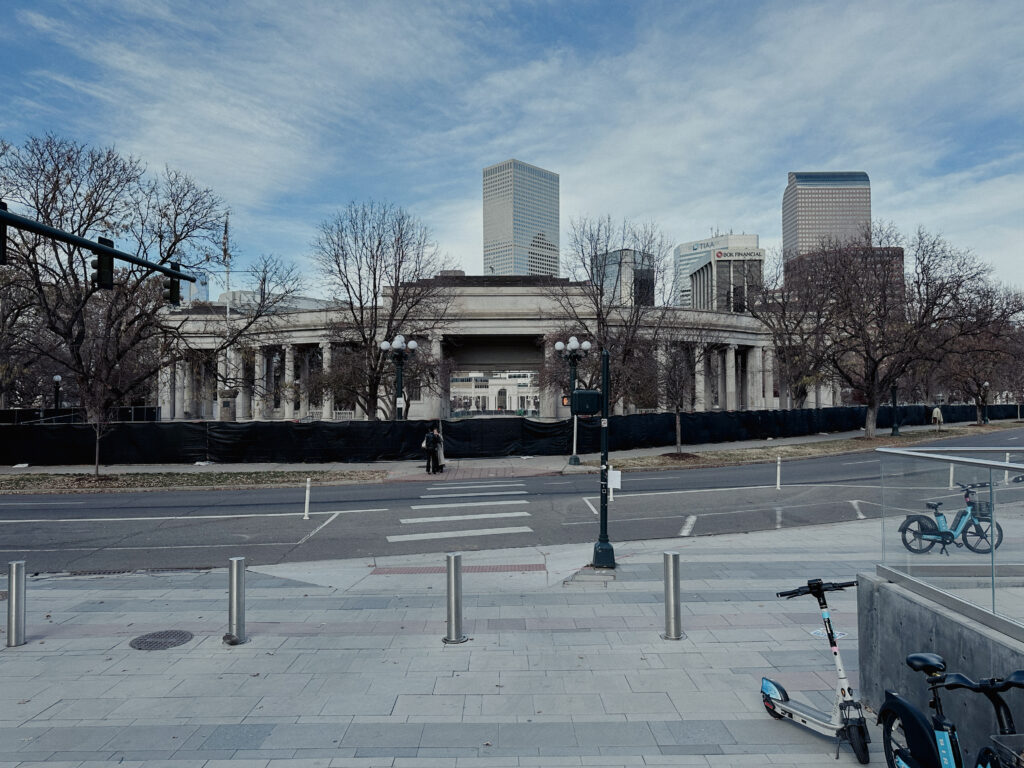
The most significant change in the first phase of the project concerns the Greek Theater. The stage will flip direction, with the seats facing downtown, a canopy over the theater stage, improvements to the park’s pathways, and a pedestrian loop around the central promenade.
But there was one Mayor who imagined a great Civic Center for a town working to define its identity. Mayor Robert Speer was one of the most transformative civic leaders in Denver’s history, an advocate for the City Beautiful concept.
He initiated several programs, including creating park space throughout the city, constructing Speer Boulevard to improve transportation around Denver, and laying the foundation for the current Denver Civic Center.
The idea was to attract tourists to metropolises around the country in an unofficial race with various public works projects.
The groundwork for the idea started as early as 1906, when, during Speer’s first term, his administration proposed a $2 million ($72 million in 2025) bond measure.
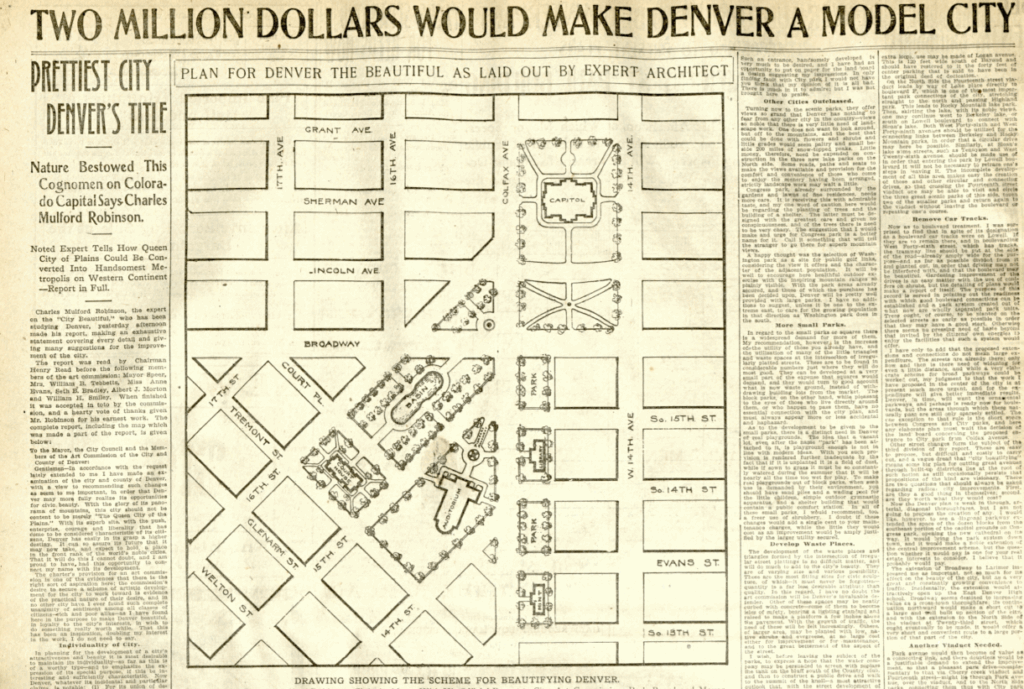
Prominent city beautification expert and civic architect Charles Mulford Robinson released a proposal on ways to beautify Denver.
Some of the proposals included preventing buildings west of Broadway from exceeding three stories to preserve the mountain around downtown and the state capitol.
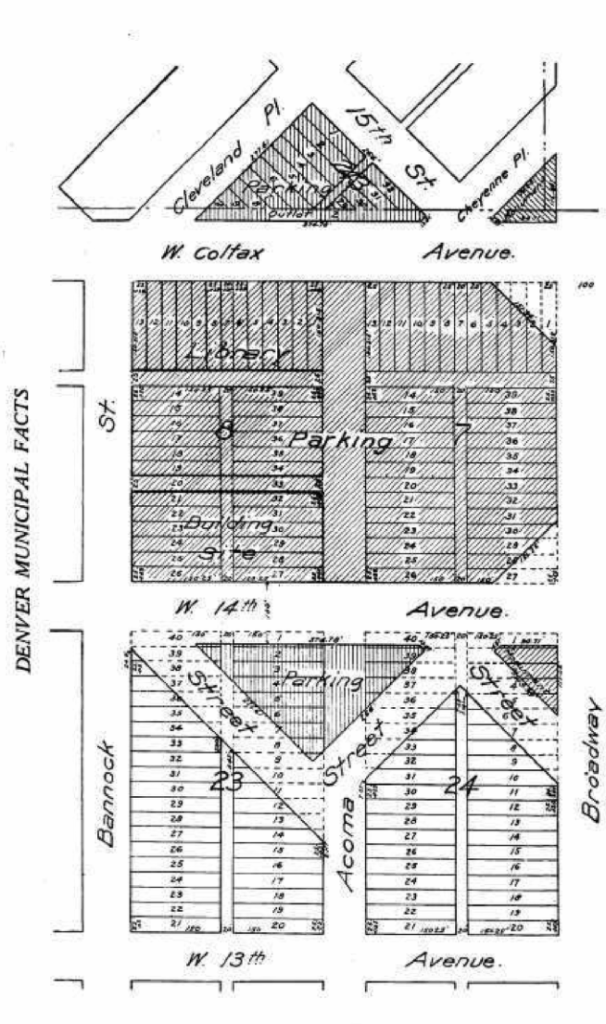
The recommendations by Mulford Robinson also included familiar sights around town, today such as extending 16th Street to the Capitol, building a Pioneers Monument, creating more small parks, opening Park Avenue to Colfax, and extending Broadway to Larimer and creating a Cherry Creek Boulevard along the Cherry winding from the Denver Country to 14th Street.
But the concept of a Civic Center had a radically different location, since they initially focused on building around the Denver Courthouse, located between 15th and 15th Street and Court Place and Tremont.
The plan also included building an oblong block from Broadway to the courthouse, constructing an auditorium nearby on 14th and 15th streets, and building a post office on 16th street opposite the courthouse.
From Robinson’s initial presentation in 1906 to 1912, the Greater Denver plan faced public opposition due to its cost. Still, the City passed a bond measure to purchase land for Civic Center Park and for other park beautification improvements, including adding six playgrounds around town, expanding City Park by 80 acres, and acquiring additional land.
The Carnegie Library, now the McNichols Building, was built in 1909 and was the first structure constructed on the Civic Center site. It was Denver’s central library until 1956, when a new one was built on the corner of 13th and Broadway.
Buildings Razed for Civic Center Park:
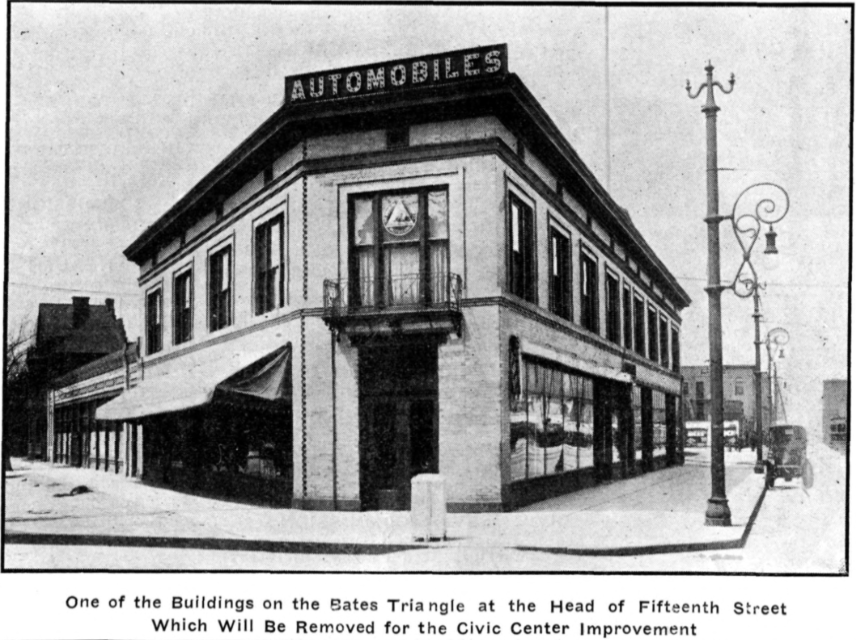
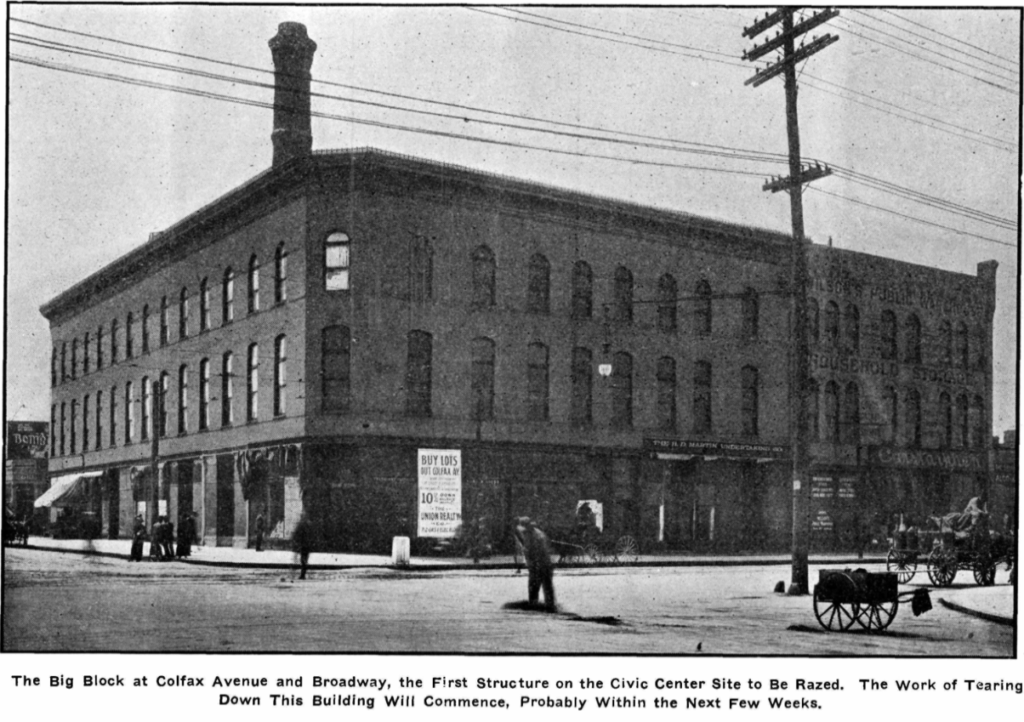
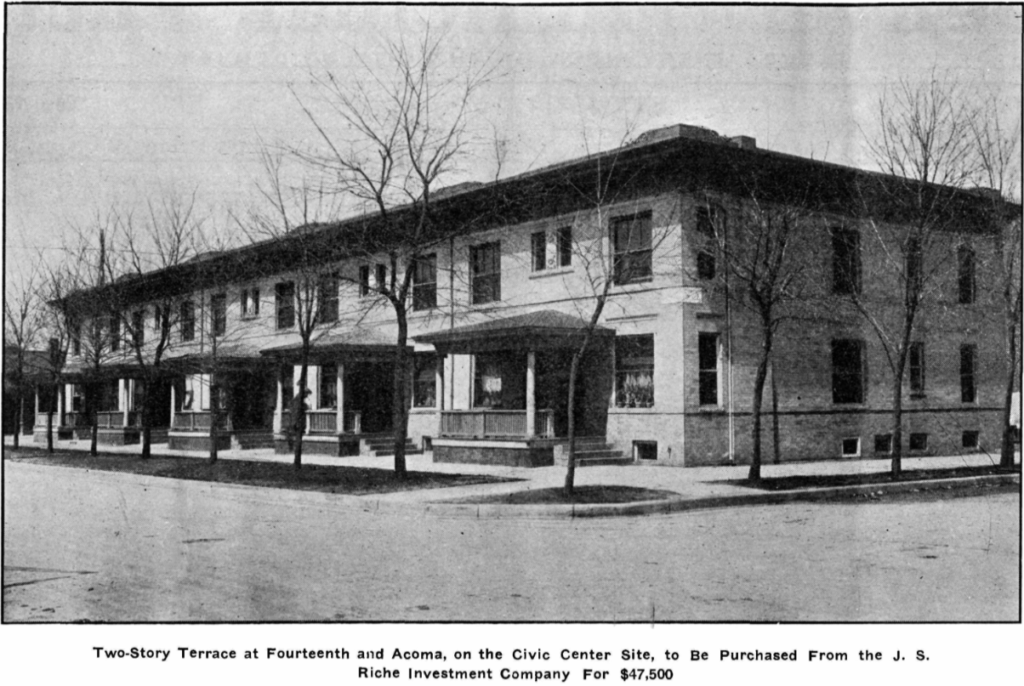
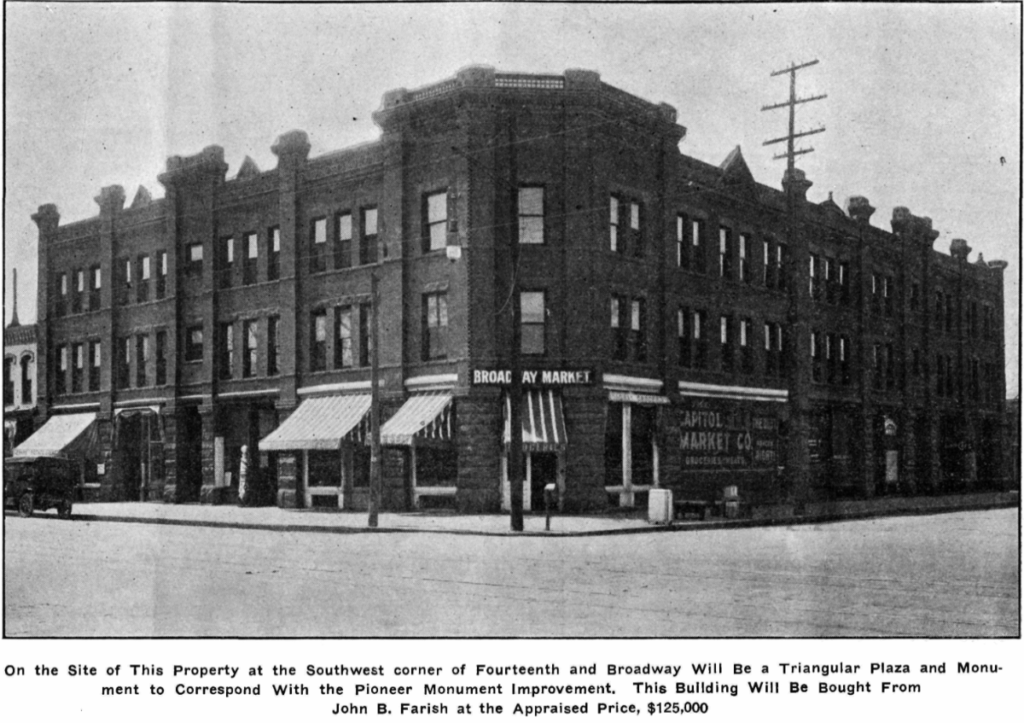
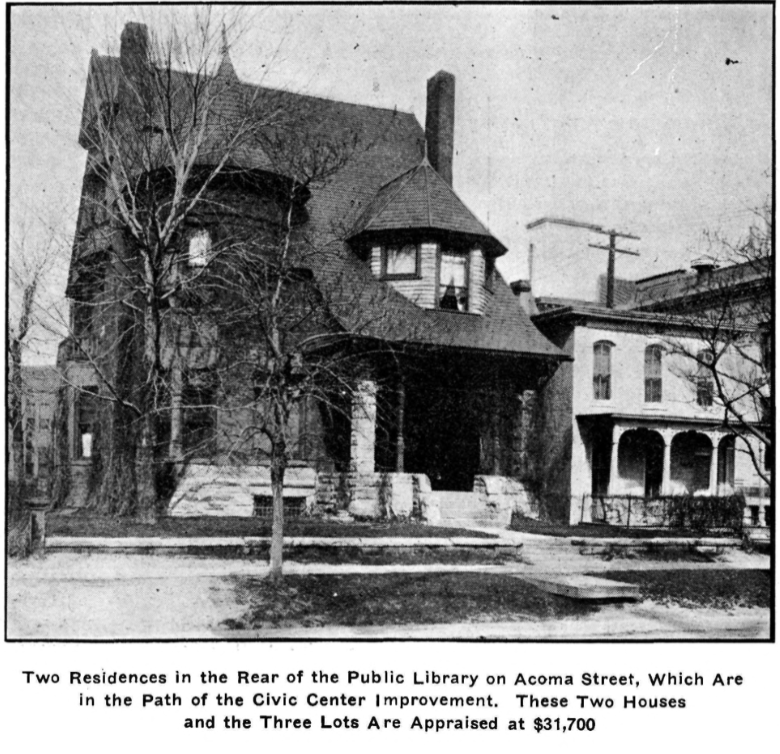
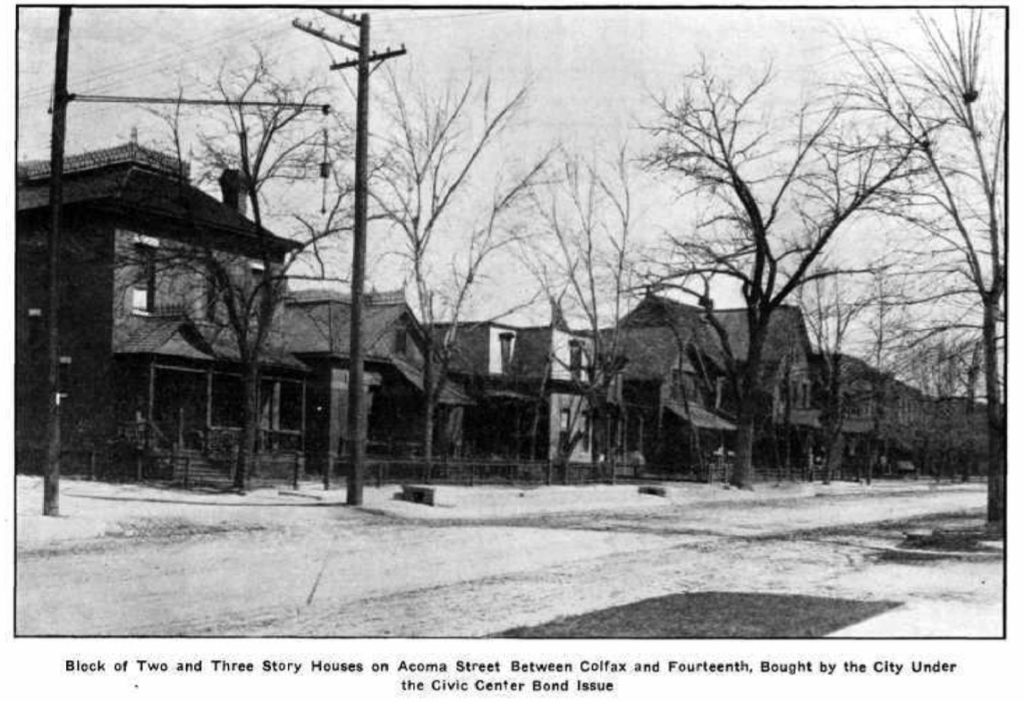
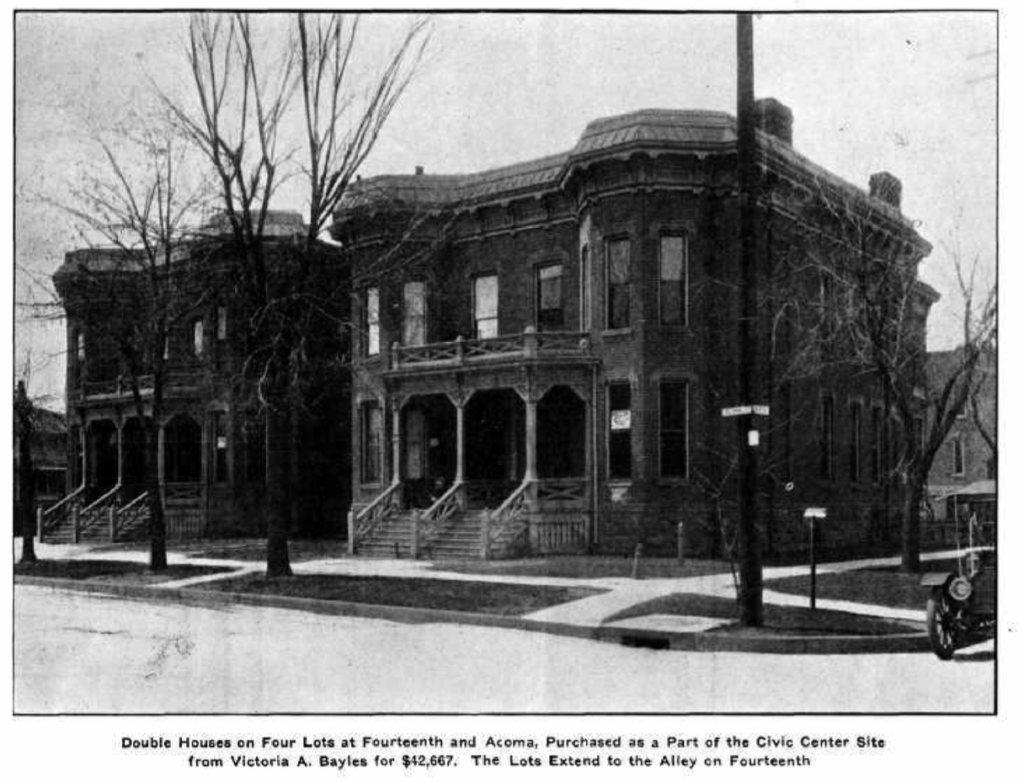
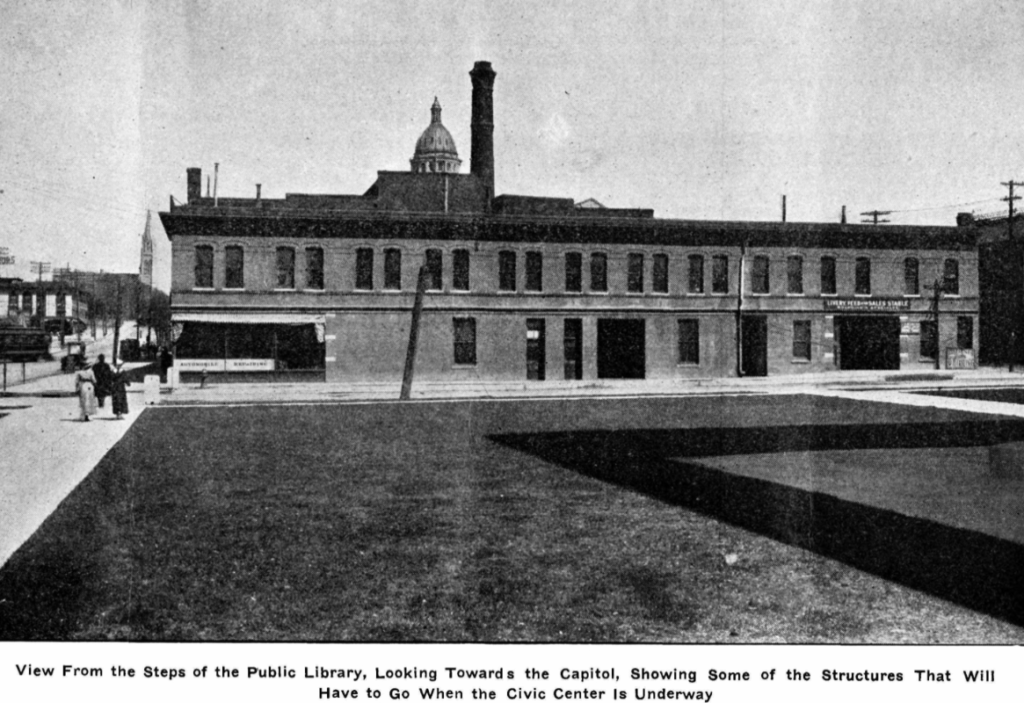
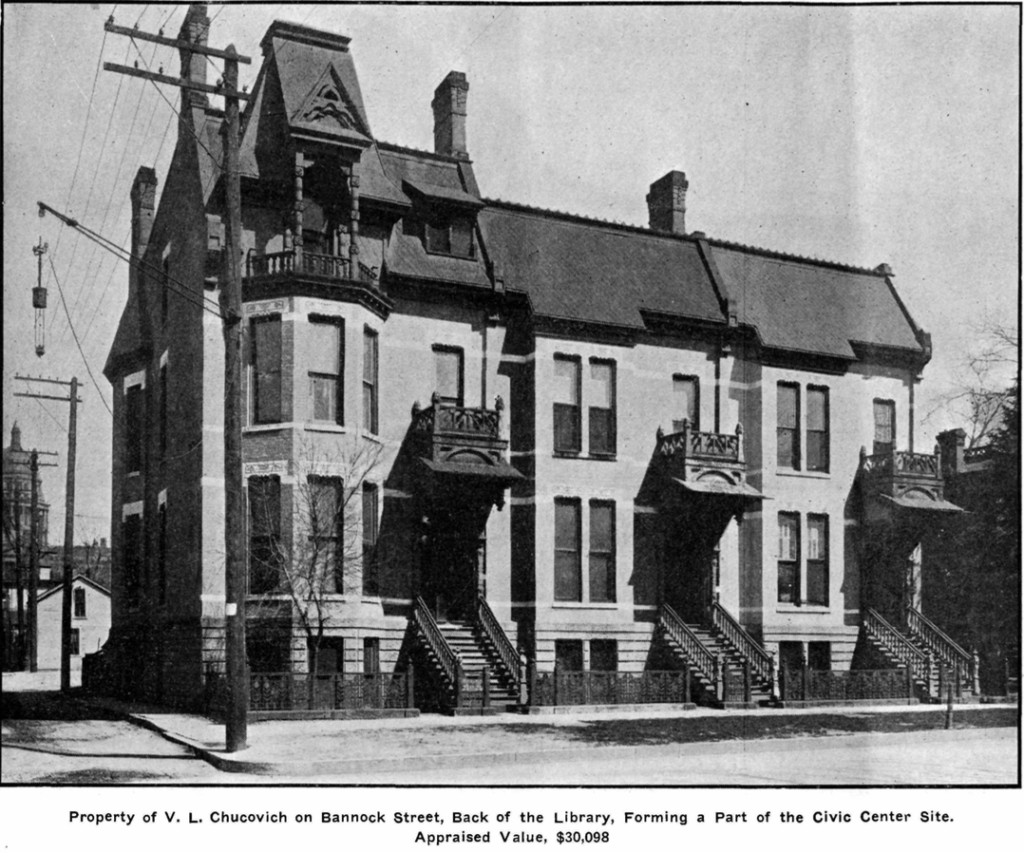
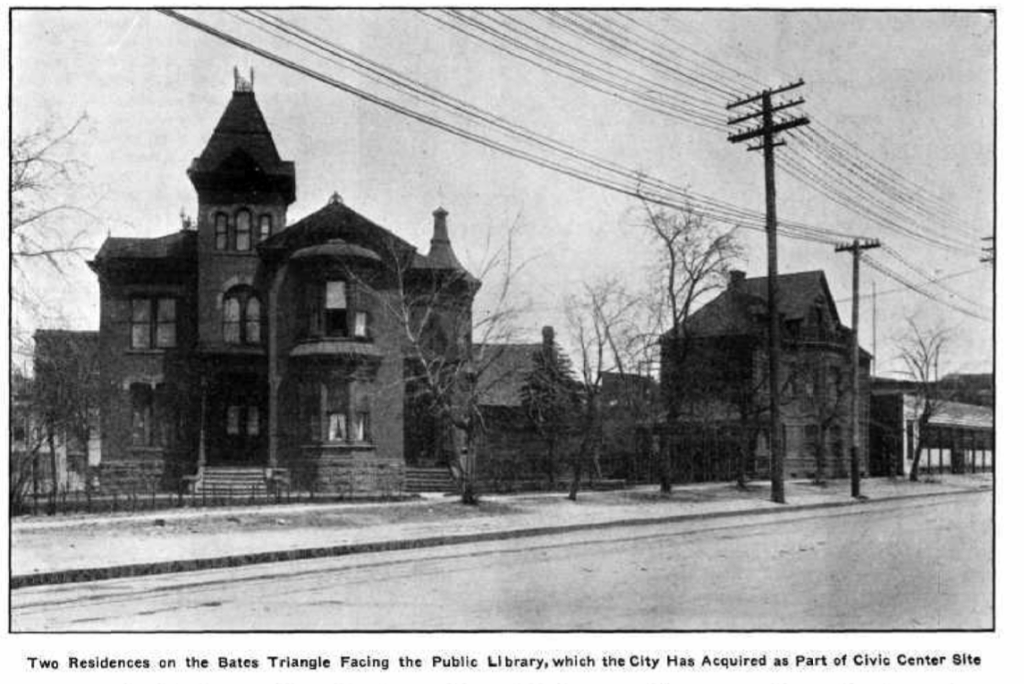
The battle to sway Denverites was taken up in the printed word when the city of Denver published its own publication, “Denver Municipal Facts.” The publication highlighted the work underway throughout town and the need for a civic center, citing other cities and their civic projects.
The bond measure passed, but in 1912, the Mayoral election brought in a new administration with a new focus on the City Beautiful project. Speer did not run for a third term, and a progressive effort to reform city hall elevated Henry J. Arnold as the candidate of the people, since he did not run under the Democratic or Republican tickets.
The bond measure included the razing of the buildings in the designated area from Bannock to Broadway and 13th to Colfax. Still, more funds would be needed to add fixtures like the fountain and build buildings to house the courthouse and city hall.
Mayor Arnold continued demolition work on buildings at the proposed Civic Center site. The scale of the project was reduced, with more focus on adding to Denver’s mountain park system and on infrastructure to get Denverites to those lands.
Mayor Arnold was not long for his time as mayor, serving only from 1912-1913, and two others were appointed before the 1916 election, when Speer ran and won a third term. His city beautification projects were on the back burner. He breathed new life into them, including adding a fountain and an outdoor stadium, which later became the Greek Theater on the grounds of Civic Center Park.
While the Greek Theater was built on the southern side of Civic Center Park, the northern end was anchored by the Voorhees Memorial, which included a classical revival colonnade and gateway with a reflecting pool.
Plans for an open-air Greek theater were finalized in 1917, designed by Edward Bennett. Construction started in the spring of that year and would not be dedicated until 1919. However, Mayor Speer did not live to see his vision come to fruition since he passed away on May 16, 1918, from pneumonia.
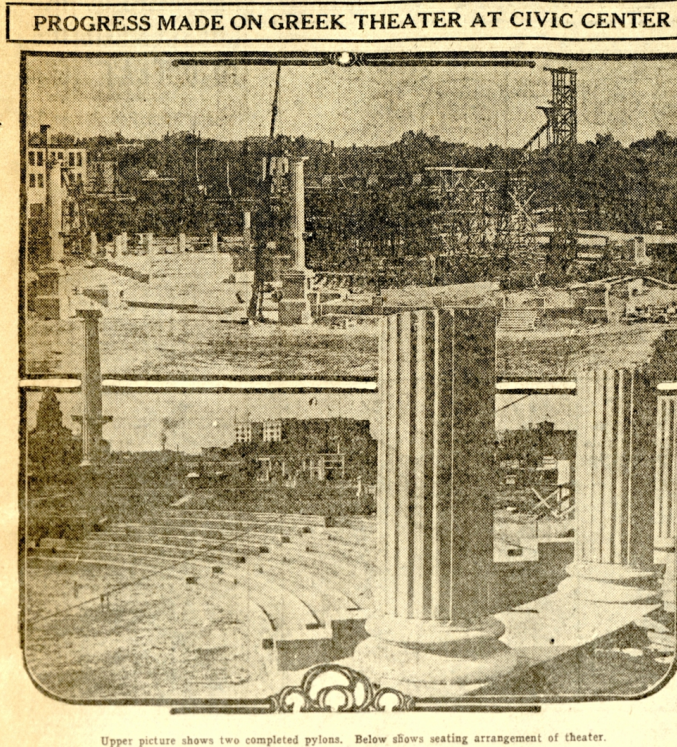
The Greek Theater was formally dedicated on August 4, 1919, and Mayor Arnold honored Speer’s vision for a civic center as a gathering place for Denverites. “Recalling the memory of our great mayor, we here and now dedicate this colonnade of civic benefactors and Greek theater to the common good of our people, and we pray the blessing of heaven upon our holy purpose to have here an inspirational center where, with great music and patriotic speech, we may do what we can to create a homogeneous people in whom patriotism shall mean love of liberty for ourselves and love of liberty for the whole human race.”