
Denver at the turn of the 20th century wasn’t a city but a cluster of communities separated by economics and ethnicity. The dwellings west of the confluence of the South Platte River and Cherry Creek were the homes for some of the wealthy who wanted to escape the plumes of black smoke billowing out of the downtown area. They were also a popular locale for newly arrived Irish and Italian immigrants.
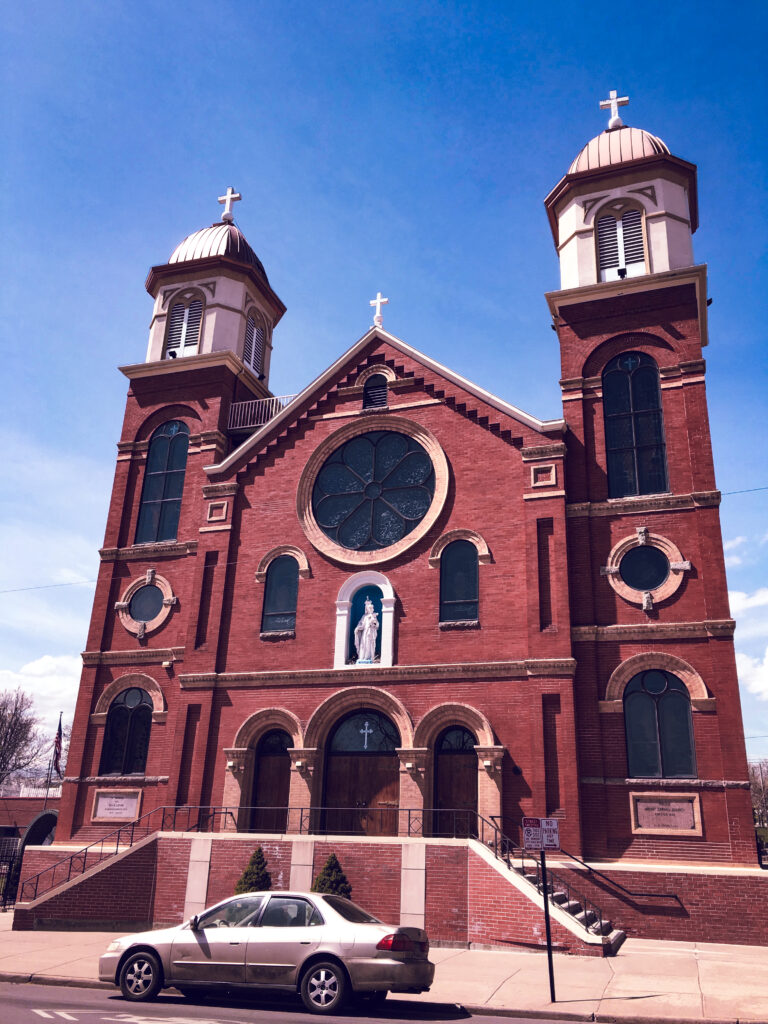
The new residents brought their faith and customs to the Mile High City. While Irish immigrants established St. Patrick’s Church at 33rd and Pecos in the mid-1880s as a place of worship, Italians yearned for a sanctuary of their own.
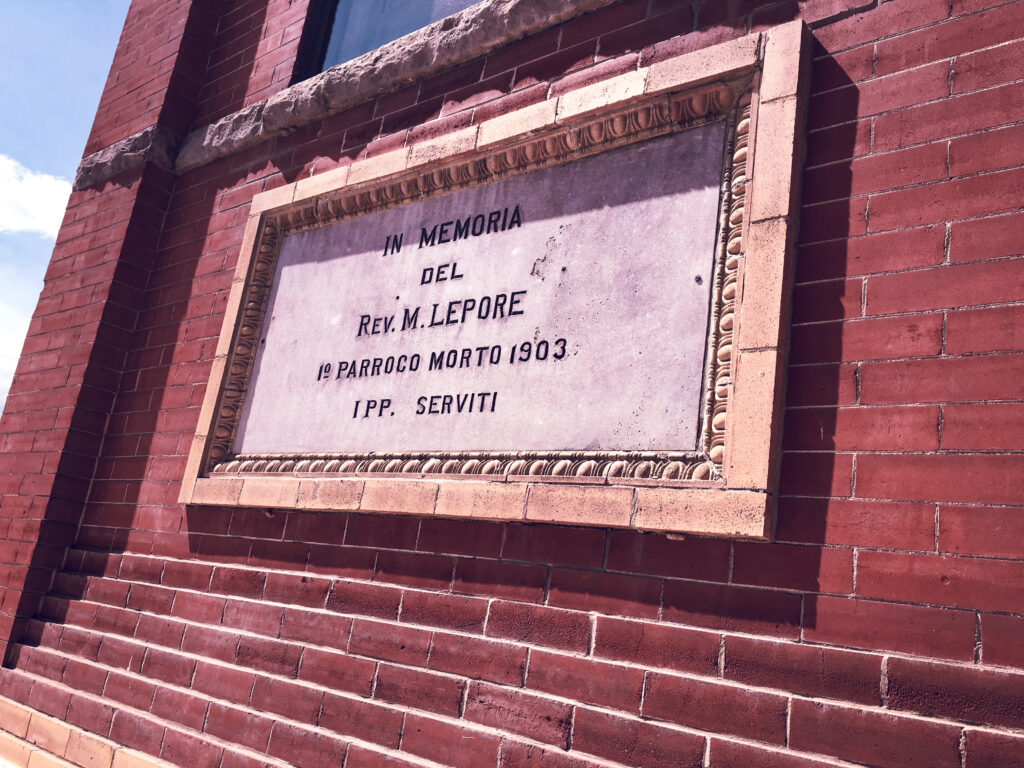
Assistance arrived in 1893 when Father Felice Mariano Lepore came from New York City to serve God and his Italian brethren. He was described as a champion for the poor Italian immigrants. He became the face of the Mount Carmel Society, a group dedicated to bringing a Parish to the Italian neighborhood.
However, his time in Denver was marred by controversy.
The effort to establish Mount Carmel Church wasn’t popular with everyone in the neighborhood. A rival Italian group, the St. Rocco Society, also wanted to establish a parish. The conflict came to a head when a fire destroyed the first Mt. Carmel church in August 1898 and some of whom believed it to be an act of arson.
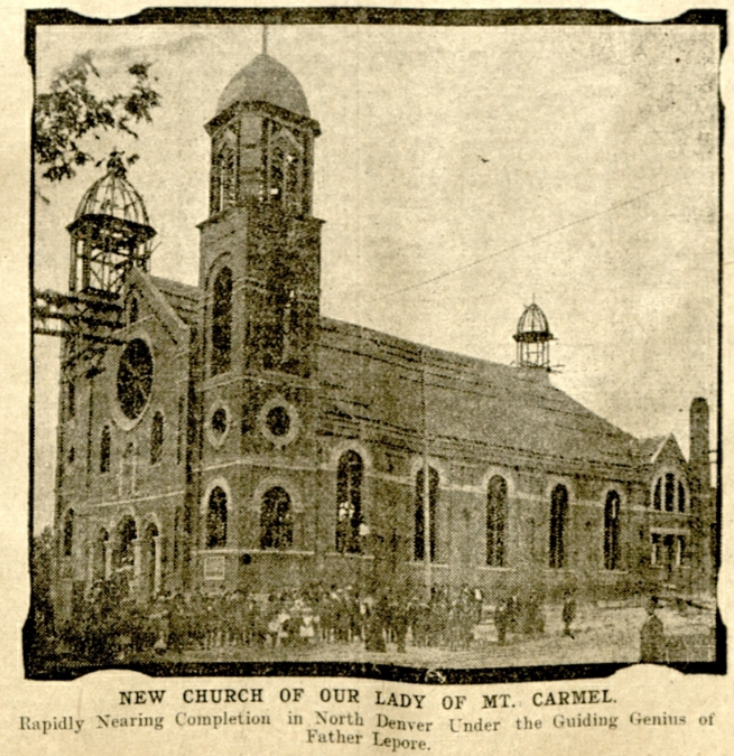
Despite the fire, the Church was to be rebuilt. Father Lepore was also an industrious man who filed several patents, including a new life preserver and a fire escape device inspired by the fire that had razed the first Mount Carmel church.
As Father Lepore helped lay the cornerstone for the new Mt. Carmel in 1899, he would not see its formal dedication five years later.
Vendetta acted out
On a gray evening on November 18, 1903, Father Lepore and an acquaintance, Joseph Sorice, played cards in the priest’s study, located in the rear of the church. Lepore’s nephew, Frank, stepped into the office to warm up from the cold and made his way to his room on the church’s second floor.
Lepore’s cook was also in the church and later told the Denver Republican newspaper that he wasn’t aware of any signs of conflict until he heard gunshots ring out at about 10 p.m.
Frank ran downstairs, half-dressed, and saw his uncle and a stranger struggling in the kitchen. Father Lepore was able to steal the gun from the assailant and another shot rang out. Father Lepore broke away from the assailant and ran into the church’s sanctuary section, while the other man ran into the basement.
Both the cook and Frank said they had no clue why the two went from peacefully playing cards to a mortal struggle. When the police arrived, they found Father Lepore at the altar, facing the life-sized statue of Christ. His head was lying on a prayer cushion and his blood stained the carpet of the altar steps.
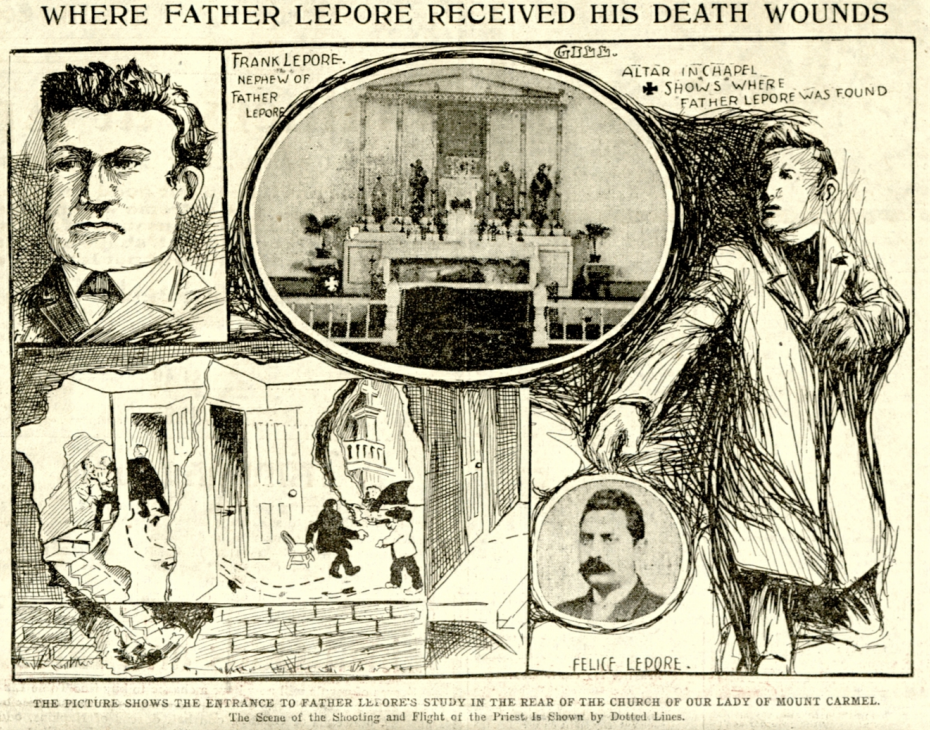
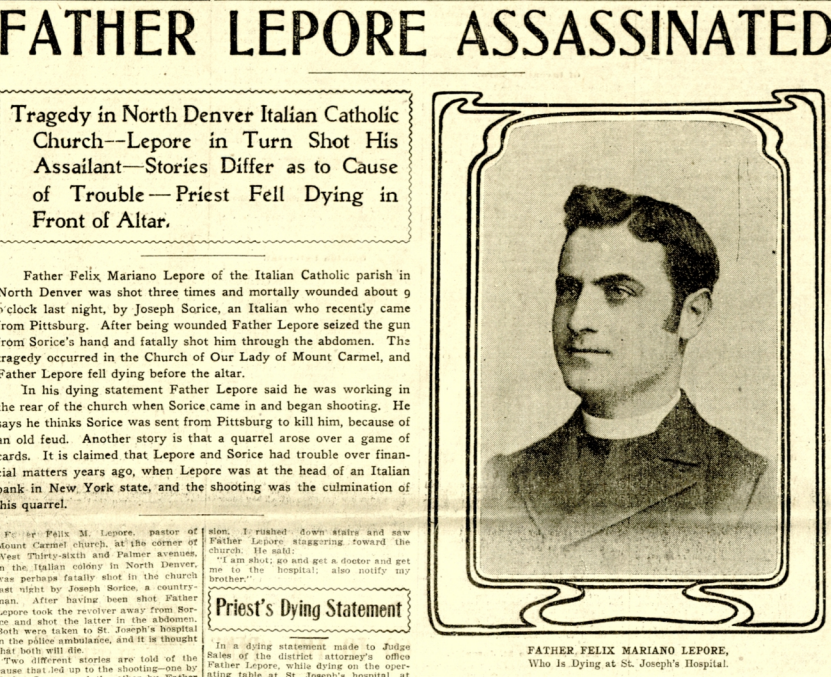
Both men were transported to St. Joseph Hospital. At the hospital, doctors determined that Lepore’s wound was mortal. The bullet entered the left side above the hip, passed through the abdomen and came out below the navel. The second bullet struck the right elbow and passed through the forearm. The third bullet hit him at the angle of the jaw and came out at the point of the chin. The one shot fired at Sorice struck him in the front of the abdomen and passed through his body.
There was enough time for Lepore to offer a deathbed statement that was radically different from what the two witnesses reported. He said that he wasn’t playing cards but writing at his desk when Sorice came in very drunk and had some words for the priest. Lepore didn’t say what those words were, but Sorice shot him without warning or provocation.
“My name is Felice Lepore. I am 46 years old. Joseph Sorice shot me at about 9 o’clock tonight. I was sitting in my office, working, when he walked in. He said nothing to me. I saw him coming into the office and asked him to sit down. He said nothing to me but pulled out a revolver and began to shoot. We had no trouble before and I did not expect him to shoot me. He came from Pittsburgh about a month ago. I had no problem with his relatives or friends, so far as I know. He had no relatives here that I know of.”
Lepore also said that he was afraid that Sorice was sent out from the East, presumably from New York, to kill him. He first met Sorice a month before the shooting. Lepore stated that there were no warnings from back East, but he felt that he was going to kill him from the first moment he met the man.
“He shot me three times and then started to run away out of the back door. I ran after him to the back door and I caught him and said, ‘You have shot me.’ Then, I grabbed the revolver that he had in his hand, turned it towards his breast and shot him. He held the revolver in his hand when I shot him. I could not pull it away from him. He had no friends here.”
The doctors who worked on Lepore had little hope for the wounded priest. His brother, Felice, and nephew were at Lepore’s bedside. The priest embraced and kissed his relatives and said to his brother. “Take charge of everything, my brother; I have only two or three hours to live.” He succumbed to his wounds early the following day.
In a nearby room, Sorice never said a word but simply groaned all the time until he succumbed to his wound.
Father Lepore was interred at Mt. Olivet Cemetery. His funeral was one of the largest attended in the city’s history (at the time). Mt. Carmel was filled, while a large crowd of mourners remained outside.
The casket rested in front of the altar and candles burned above the lifeless figure. Following the funeral services within the church, the casket was placed in a hearse and the procession moved slowly, led by a large brass band, to Union Station, where a special funeral train took the mourners to Mt. Olivet, where Father Lepore was laid to rest.
Most would think this is the story’s end, but following the funeral, conspiracy theories flourished concerning Lepore’s death.
The bad blood Lepore created didn’t end as he lay dying in a hospital.
“This shooting had to be just from the nature of the man,” said prominent community member Frank Damasclo the morning of Lepore’s death. “I did not know, of course, who would do it nor the reason for it being done, but a man who lives as he has done is sure to be shot down sooner or later.”
Theories for the Shooting
The Denver Republican postulated that Lepore was shot from a previous feud between the two men dating back to the priest’s days in New York City and possibly as far back as the old country, since both came from the same province of Avellino, Italy.
Several weeks after the murder, Sorice’s companion, Pasquale Cortuso, was arrested by the police. He was found drunk, brandishing a stiletto and threatened anyone who would approach him. The police seized and took him into custody before any retribution could be taken out on him by Lepore’s supporters.
According to Pasquale’s interrogation, the pair had no ill will towards Lepore. Sorice was supposedly Lepore’s godfather. He did acknowledge that Sorice was a professional gambler who regularly cheated at cards. Perhaps this is one reason for an altercation between Father Lepore and Sorice.
Sorice and an acquaintance were rumored to have approached Lepore for $240 when they arrived in Denver just weeks before the shooting. Lepore refused to pay the money but got them a house to live in and work around town.
The Republicans also reported that Sorice and Pasquale came from Pittsburgh to Denver to obtain money that they had lost from a bank business in which the priest was involved.
Sorice quickly gained a reputation around the neighborhood as a wise gambler, a trait that both shared. Two weeks after their arrival, Father Lepore told the police that Sorice visited the priest with a revolver and demanded the money owed.
On the day of the murder, Sorice was seen at a card game in the back room of a neighborhood grocery store. He drank a quart of claret until the game was broken up around 6 p.m. At 7:30, Sorice walked into Rena LaBatt’s home, where he spoke to Frank about general topics without indicating his future deed. Sorice left the house at 9 p.m., where, shortly after, shots rang out less than a half hour later.
Another unusual incident came to light when, before the shooting, Eveyln Benns, a former employee of Lepore, called a police captain and said he was the victim of a plot by his enemies. She gave no clue as to who was behind the plot, but back in August, she had reported that she was attacked after leaving Mt. Carmel one evening.
Another part of the mystery was that the doctor who worked on both men determined Lepore wasn’t able to shoot Sorice in the way the two witnesses described it. Sorice told the doctor that Lepore didn’t fire the gun at him at close range and the shots inflicted would’ve made it unlikely that he could do that.
This brings up the question as to who shot Sorice. The only two men reported in the room were Lepore’s nephew and the cook. Was Father Lepore hiding the person who shot his assailant? It’s not out of the realm of possibility since he said he was working on his study in his deathbed statement, but even his nephew stated that he was playing cards with Sorice. Is this the bigger conspiracy his former secretary was talking about?
Lepore’s Secrets Unveiled
Speaking of his former secretary, another secret came to light. There was a fight for Lepore’s estate, which included several patents he had for fire escapes, between his brother and alleged wife Evelyn Benns, who also claimed that the priest had a son.
Evelyn said that before Lepore’s death at St. Joseph’s Hospital, he told his secret wife to get the papers to secure his estate. However, following his death, Lepore’s brother produced a will created 12 years ago to show that he and his sisters were the rightful heirs.
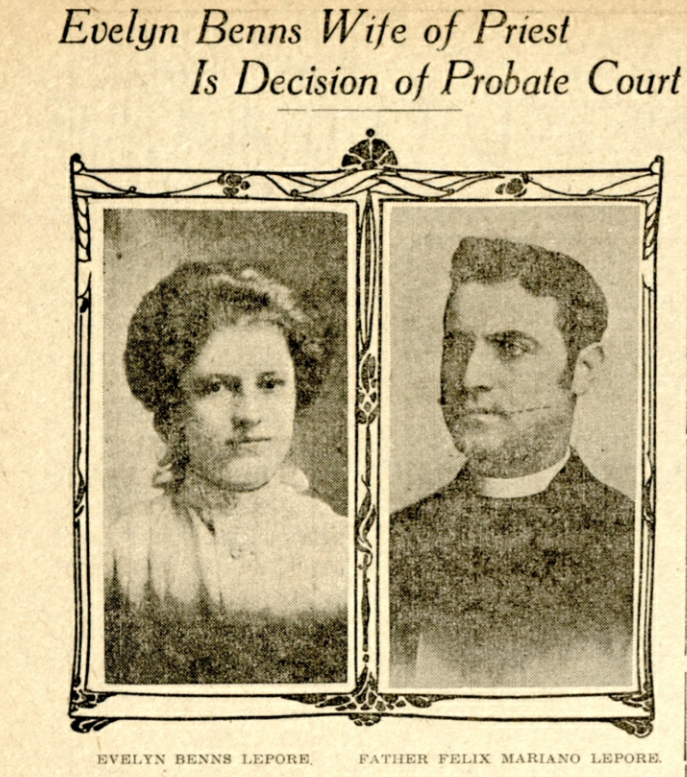
In September 2007, a civil court judge declared Evelyn to be the legal widow of Father Lepore and Victor Mariano Lepore, born Sept. 15, 1898, the legitimate offspring of the union. The judge ruled that they had a common-law marriage dating back to July 1, 1896.
Following the decision, the Catholic church told the Denver Republican newspaper that Lepore was never an ordained minister since he came from a discredited seminary school in Southern Italy. The Church recognized the marriage as legitimate since he was not elevated to the priesthood.
While the estate wasn’t worth much, she felt vindicated that her son had a legitimate father.
The mystery of Father Lepore’s life and death remains unsolved to this day. Still, his efforts to help build Mt. Carmel church are a testament to his contribution to Denver’s fledgling Italian immigrant community.