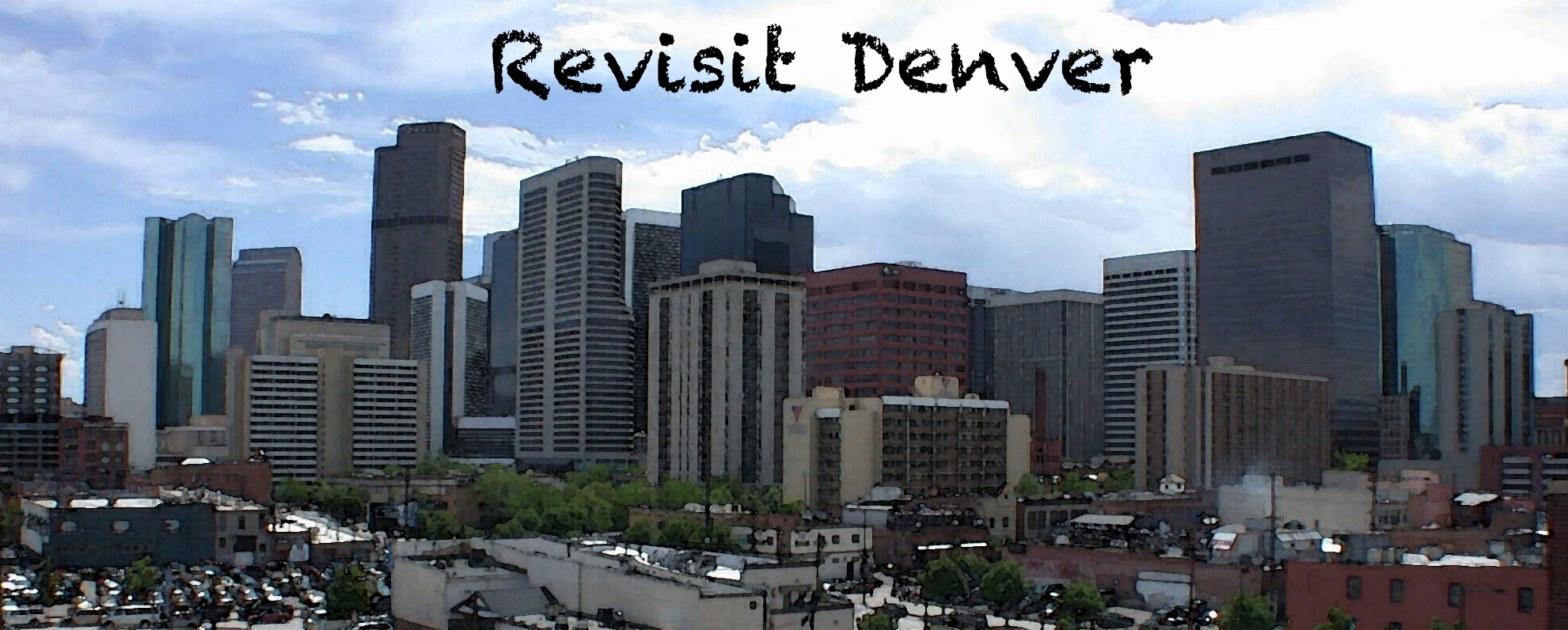


Early Denver served as a crucial stop for those seeking fortune in the heart of the Rocky Mountains. The promise of a fresh start, striking it rich on a claimand showcasing newfound wealth amid the Wild West attracted dreamers. However, by the 1880s, Denver transformed. Wooden structures gave way to brick-and-mortar and mansions reflecting mining wealth, replacing log cabins.
The boom town at the confluence of the South Platte and Cherry Creek experienced a gold and silver rush that lasted over 20 years, along with other precious metals. Some miners struck it rich beyond their dreams, while the vast majority were still eking out an existence and waiting for the chance of a quick score.
The dream of ungodly wealth is why many still poured out of Union Station to find a quick rest before venturing west to a mining town. That same dream brought others seeking to exploit the naivety of newcomers.
Art of the Grift
Imagine a young man with a few coins in his pocket arriving in Denver. Some may opt for a room at the nearby Oxford Hotel, steps away from the Union Station, while others venture to Larimer Street and the Windsor, Denver’s premier hotel in the 1880s.
En route to the Windsor, this young man might encounter a well-dressed gentleman on 17th and Larimer, none other than Jefferson Randolph “Soapy” Smith. Soapy positioned himself as a savior for weary travelers, offering a seemingly simple product – a bar of soap priced at 25 cents apiece.
Critics might label this soap’s cost as highway robbery, considering that similar bars could be found for 5 cents in other shops. To put it in perspective, 25 cents in the 1880s equates to $5 or $6 today.

Soapy’s soft southern drawl filled the air as he peddled soap to newcomers passing by. Many willingly parted with two bits for soap, justifying the expense for the sake of convenience during their travels. Even with train travel, the journey from point A to B took weeks, making spending a little more on a necessity, not an uncommon choice.
As the day progressed, Soapy changed his sales pitch, attributing a higher value to soap. “Cleanliness is next to godliness, but crisp greenbacks in the pocket are a paradise in themselves. For $5, you get a bar of soap and maybe $100!” he proclaimed.
The Fix was in
During his pitch, Soapy wrapped bills of various denominations – $100, $20, $10, $ 5, and one-dollar bills – around the soap, replacing the blue-paper wrapper. Tossing the re-wrapped soap into a basket, several onlookers eagerly stepped up for a chance to double their money, or possibly more.
The initial participants unwrapped their soap, finding $5 or $10. A loud yell erupted from a man who won $20, drawing more attention from the crowd. Hurried murmurs spread about the fortunate winner until even more dropped their money into the Southern gentleman’s hand.
Little did the crowd know, except for those in on the scheme, that many a fool and their money would soon be parted. The unsuspecting Denver visitor fell for one of the most famous cons in town. Soapy orchestrated an elaborate game to swindle what would be today’s equivalent of $100 from those seeking easy money.
Being an honest con man, Soapy did wrap some soap with larger bills but employed sleight of hand to remove lower denomination dollars. For those still holding $20 or $100, he subtly crinkled these bars, prompting his assistants to grab them and initiate the unofficial lottery.
The fix was in from the moment any person showed interest in making easy money on the streets of Denver. If a duped person caused a stir, Soapy’s gang would rough them up or even resort to violence, maintaining the Wild West chaos in downtown Denver despite civilization’s encroachment.
Soapy’s schemes showcased that Denver, while evolving, was still built on the promise of getting duped by con artists, swindlers, chiselers, miscreants eager to fleece visitors out of their hard-earned money.
From grifted to grifter
Jefferson Randolph “Soapy” Smith was born in Newman, Georgia, in 1860. Following the Civil War, his family moved to Texas for better prospects. As a teenager, he was a cowpoke on the Chisholm Trail, which made him familiar with saloons, gambling halls and bunco artists in Texas and Kansas cowtowns.
He became intrigued with the con artist’s life after he was cleaned out in a walnut shell game at a carnival in Abilene, Texas. After the grifting, he went to a friend to borrow $20.
“You don’t mean you’re going to try again?” the friend asked.
“No,” said Soapy.
“I’m going to join the show and learn that game.”

His mentor at the carnival was a noted con named Clubfoot Hall.
In 1878, the carnival arrived in the bustling mining town of Leadville, where he learned about the soap scam from another grifter, “Old Man” Taylor.
Soapy and his associates moved to Denver in the 1880s to run any number of schemes in town. All bets were off for newcomers, but there was an ironclad rule that not even Soapy would break: “don’t steal from Denver residents.”
The rule was set by Denver’s underworld boss, Lou Blonger, who said it was okay to run any number of schemes on others traveling through the city, but leave the locals alone.
Reasons for this rule were simple: Strangers to a city are less likely to contact the police for fear of embarrassment. Nobody new to the town wants to admit they were bilked out of money from three-card Monty.
It was also easier to take care of any complainers who were duped out of their money. There may not be a public outcry to find a missing traveler, but there would be hell to pay for any blue-collar worker not making it home from work that day.
Soapy had an office in a building on the corner of 17th and Larimer where he and his gang planned out any number of schemes they would run on unsuspecting victims.
The city government of that time favored kickbacks and under-the-table bribes from bunco artists rather than cleaning up the town. Soapy flourished in this environment until citizens began pushing hard for reform.
In 1892, the good times for grifters came to a halt when the reformation movement came to Denver. Soapy read the writing on the wall and moved to the southern Colorado mining camp of Creede, the latest boomtown. This was a prime spot for Soapy to not only run the con games in town but also the government itself.