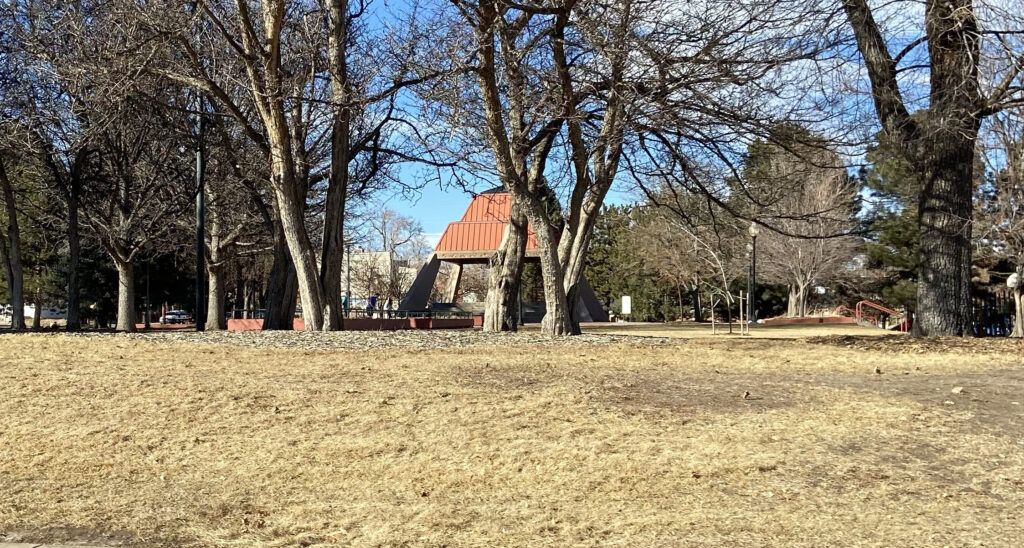

Pride, in healthy doses, can be an effective means of achieving goals. The 1970s were a time when Denver communities took pride in their heritage, and for many Latinos on the Northside, that focus was personified within La Raza Park.
The one-block park, then known as Columbus Park, became a retreat for the community’s youth. City officials gave the park little to no care and maintenance. The grass was overgrown, and trash was not correctly removed, unlike in other parks in more affluent areas, such as Washington Park. La Raza Park had a pool, but there were reports of glass at the bottom.
Pride in the park was planted by Arturo “Bones” Rodriguez, the first Chicano park manager, who cleaned up the park to make it usable for the community. The pool was cleaned, picnic tables were installed, and the lawn was mowed. While the youth frequented the park, so did drug dealers.
The Northside wasn’t the gentrification hotbed that it is now; poverty punctuated the area, and unemployment for Latinos was incredibly high. The cycle of poverty was genuine, and drug dealers were exploiting the hopelessness that permeated the area. But places like La Raza began to act as an oasis, and keeping it clean helped attract pride from those who relied on visiting the park to escape from the day’s problems.
The turbulent summer of 1972 started with painting a mural on the bathhouse wall. The design incorporated Aztec symbols to honor the Mexican ancestry of park attendees. The old guard neighbors were not happy with the mural.
The Italian community flourished on the Northside for decades. The one-block park was dedicated to Columbus Park in 1951 to commemorate the Italian residents in the Mile High City.
So, the district’s recently elected city councilman was more than happy to advocate for censoring the mural and using city resources to instill “law and order.”
A Man Not for All the People
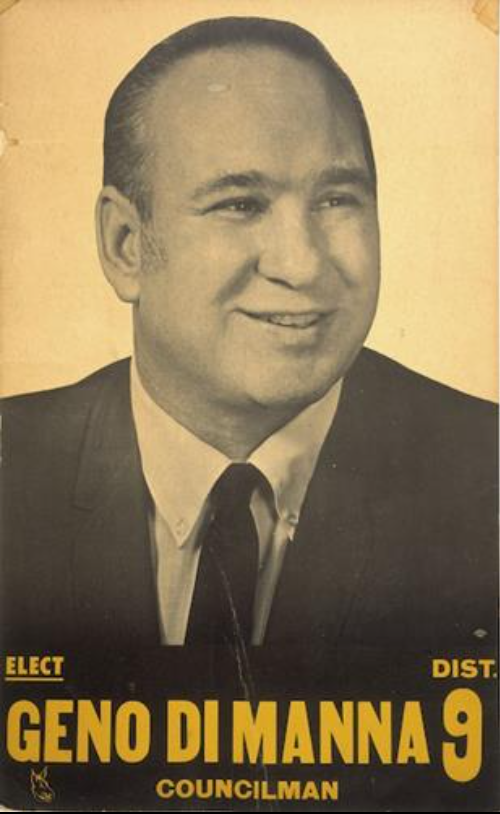
At the time, Eugene “Geno” DiManna was the city council representative for District 9, which included Denver’s north and west sides. He had previously run and lost but won in 1971 due to a split vote within the growing Latino community, which was moving into the previously predominant Italian-American area.
The Rocky Mountain News reported that DiManna was signed by the Chicago Cubs in 1949. He was considered one of the best athletes in Denver’s Parochila League and helped lead his high school team to football and baseball championships.
Geno DiManna also owned several businesses in the neighborhood. He owned a liquor store on the corner of 32nd and Zuni. His house was across the street on the other side of 32nd Avenue. The Geno’s Liquor sign is still up at the liquor store. But neighborhood bar Pic’s Corner, which he also owned, was his unofficial headquarters.
The tense moments depicted in the mural and the rise of the Chicano movement have garnered increased press coverage and more articles about the neighborhood. A Boulder reporter from The Straight Creek Journal visited the tavern, where they reported signs of unrest in and around the bar: One of the two windows was covered in plywood, while the other had four bullet holes. Scorch marks in the bar’s backroom bore witness to recent scorch marks in a room within the bar. Not much more can be found about this, but it’s most likely from the events going on that summer on the Northside.
DiManna’s position helped him cut through red tape for others applying for a city job or assisting someone in getting on public assistance, such as welfare, more quickly. His approach to community-building was done one favor at a time.
“If I do something for somebody now, they owe me something four years from now and have to vote for me,” he said in The Straight Creek Journal article written in the summer of 1972.
This approach worked well for his friends and those he was seeking favor for the next election, but it did little for the rest of the district residents he allegedly represented. The north and west sides of Denver, which fell into DiManna’s council district, were some of the more impoverished areas of town. The Italian-American community was in flux, and their children were moving out to the suburbs.
Unrest at La Raza Park

When the pool opened in June, DiManna used his resources to bring police to enforce a curfew and forcibly remove the youth who gathered there. Police presence within the park was at an all-time high, with cops constantly arresting and harassing Chicano residents who frequented the park. This clashed with DiManna’s interests, as some publications claimed the Denver Mafia allegedly had a hand in directing the city councilman and the Denver police to intimidate Northsiders.
Alt publication El Gallo chronicled the summer of chaos in and around La Raza Park. The tumult started. The publication wrote that DiManna was on the radio saying, “I want them Mexicans out of the park and if you have to break heads to do it, then do it.”
The tension within the community continued to grow. DiManna told reporters after a city council meeting that “Businessmen in North Denver are pooling their money to bring in outside help with guns because of the ‘youth gang.’” DiManna repeatedly emphasized the necessity of maintaining law and order, arguing that the city was failing to allow the police to enforce it, despite news reports showing police in the park using excessive force.
The events reached a critical point after a community meeting at St. Patrick’s Church, a parish with a predominantly Irish and Italian congregation, attended by DiManna and Father Jose Lara. Lara, a Catholic priest from the neighborhood church, Our Lady of Guadalupe, which Latino parishioners frequently attend, spoke out about what was happening. After the meeting, the priest was grabbed by DiManna before he got outside and was assaulted by DiManna.
At first, Father Lara didn’t want to escalate the situation by issuing a statement, and DiManna’s only words were “no comment.”
Father Lara broke his silence four days after the incident and gave his story. He told TK he was verbally and physically assaulted following the meeting at St. Patrick’s on July 7. “There was no provocation on my part and I offered no resistance.”
Decades after the incident, Father Lara added more when he was interviewed by the Colorado History Museum project to record personal histories of Denver residents.
“When I stated some of the complaints of the Latino community, the insensitivity of the political system that he represented, I was assaulted, I was punched by him.”
Fallout
The summer of 1972 sparked several notable events. First, the Denver City Council passed an ordinance that required the approval of the Parks and Recreation Advisory Board for any mural painted at a city park. At the time of the dispute with the mural, it would have been rejected due to its “unprofessional nature.”
DiManna stated that the Aztec-themed mural also failed to represent the other ethnic groups within the neighborhood.

The events at La Raza Park also catalyzed the community’s recall of DiManna. The first effort failed when the petitioners were told they didn’t have the required number of qualified signatures. They tried again in 1973 and failed again, but in 1974, the recall effort finally worked, marking the first time a Denver elected official had to face a recall race. DiManna managed to stave off the special election in February 1975 but lost the municipal election in June 1975 to Sal Carpio, one of the council’s first Latino elected officials.
However, after his loss, DiManna continued to be a source of controversy. He still owned Pic’s Corner, which had a reputation for being one of the most challenging dive bars in town.
Geno suddenly passed away in November 1984 at the age of 53. Pic=s continued its slide downward, going from dive bar to locale for drug trafficking, and was eventually closed in the mid-1990s after losing its liquor license.
The bar remained shuttered on 32nd and Vallejo for decades until it was purchased by an individual who turned the building into a loft residence. In 2018, Pic’s was torn down to make way for a new office/retail building. Today, it is surrounded by new mixed-use buildings that make the area unrecognizable to Pic’s Corner regulars circa 1972.
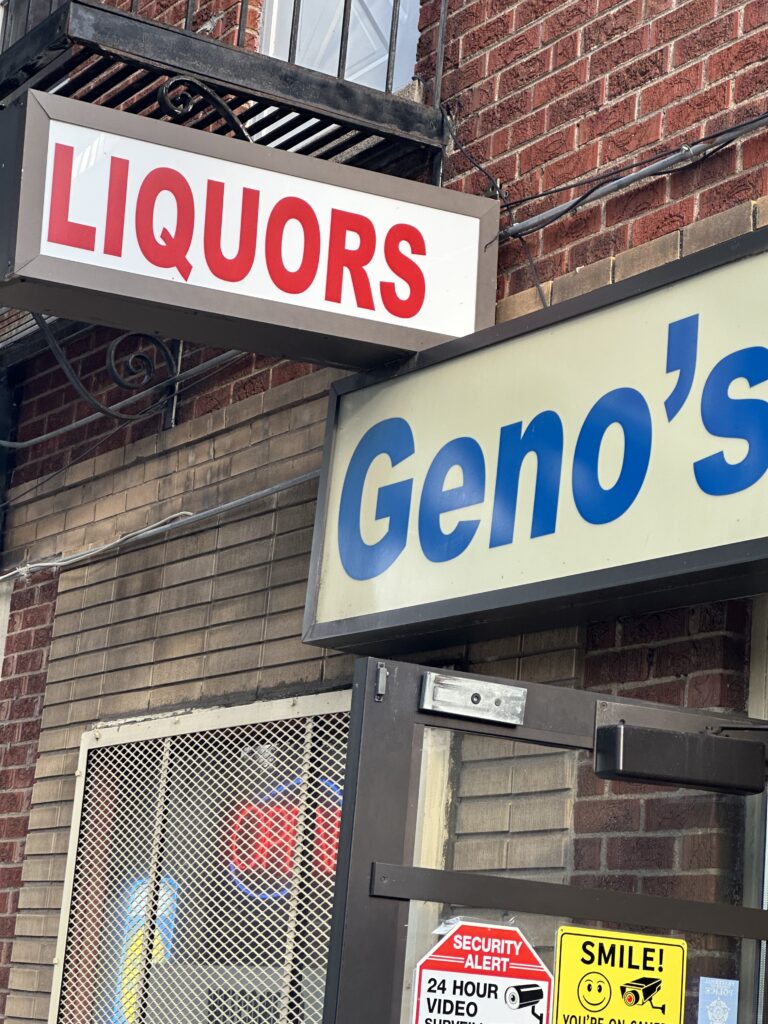
One of the few remaining indicators of DiManna in the neighborhood is the aptly named Gen’s Liquors on the corner of 32nd and Zuni, which has witnessed the decades of gentrification on the Northside. His old house across the street is nestled between two new builds.
La Raza Park became the official name of the one-block green space in June 2021, when current City Councilperson Amanda Sandoval spearheaded the effort to make the change official.
The swimming pool and bathhouse are long gone, but for many, La Raza Park remains the heart of the Northside, regardless of era.